Why Your Discovery Stays Too Shallow
Reps tend stop at the first level of pain they hear. They uncover the symptom, which they can solve and qualify the opportunity into their pipeline.
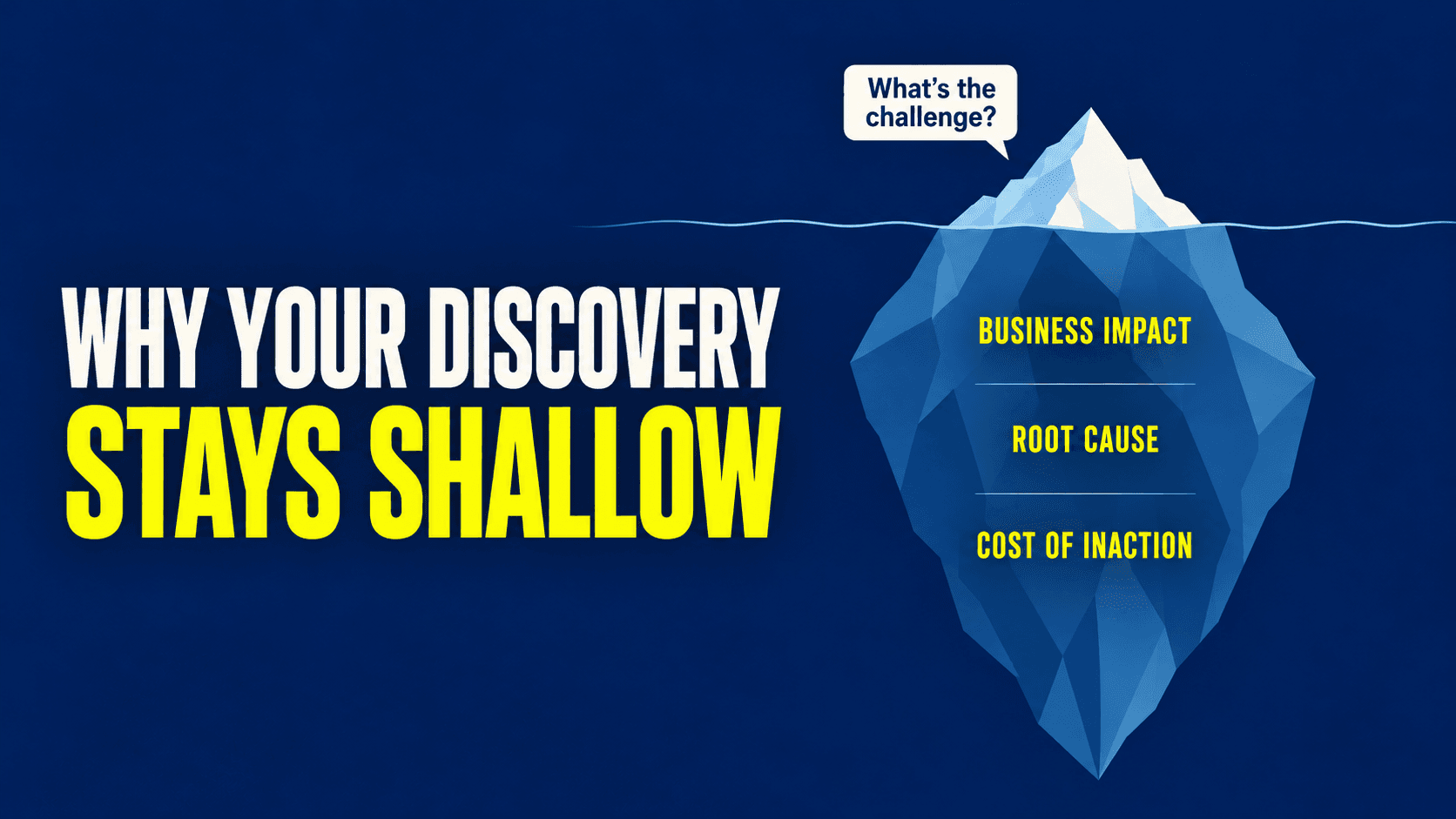
Reps tend stop at the first level of pain they hear.
They uncover the symptom, which they can solve and think bingo we have a deal.
What is missed & impacts the deal down the line is the business impact or personal consequence behind it.
The 3 levels of pain
We teach reps to think about pain in three layers:
Technical pain – what is happening
Business pain – why it matters commercially
Personal pain – why the individual cares
A prospect might say:
“Our forecast accuracy was way off last quarter.”
That is technical pain.
The rep needs to keep going.
“How does that impact the business?”
“What does that mean for hiring, runway or investment decisions?”
Now the conversation has moved into business pain. The original issue is operational. The impact is strategic.
That doesn't mean jump straight to heavy impact questions
Good discovery usually needs context first.
Before you understand the consequences of a pain it's important to understand the context
How it's showing up day to day
Who it impacts
How long it's been the case
How have they tried to solve it in the past
Then move into pain questions:
“How does that impact the business?”
“What happens if this is still happening in three months?”
“What does that prevent you from doing?”
The aim is to move from what is broken to why fixing it matters
What's the logical reason the CFO or leadership team would sign off on your solution
Personal pain needs more nuance
Personal pain is the human impact behind the business problem.
That could be pressure from leadership, frustration, stress or fear around performance.
But asking “how does that impact you personally?” can feel awkward.
Instead try:
“What would that conversation with your CEO look like?”
“Feels like that would create a difficult conversation internally?”
“Can I ask you a tougher question?”
You are not trying to manufacture emotion. You are trying to understand whether the problem has a real personal consequence that the prospect is motivated to solve.
Quantify it
Once you understand the problem, put numbers around it.
How much revenue is affected?
How much time is being lost?
How inaccurate is the forecast?
How many customers are impacted?
You do not need a perfect ROI calculation on the call. You just need enough data to make the problem concrete.
A coaching exercise for this week
Take five recent discovery calls and find the first problem the prospect mentioned.
Then ask:
Did the rep stay at the technical level?
Did they uncover the business consequence?
Did they explore personal impact?
Did they quantify it?
If most calls stop at the symptom, that is where I would coach first.
Strong discovery is about getting deep into why fixing the pain point matters on a strategic level, a business level & a personal level.